Muhammad Anis

Muhammad Anis

Robotics engineer with a master’s degree in Mechatronics Engineering, specializing in mobile robotics and autonomous navigation. Experienced in developing and validating autonomous systems for industrial and research environments, with a focus on reliable navigation, robot behaviour, and the real-world implementation of mobile robot solutions.

I have a master’s degree in Mechatronics Engineering from Aalto University. I have worked with the Autonomous Mobility research group, where I contributed to multiple projects related to autonomous systems, mobile robotics, and control. My work has involved developing, testing, and validating robotic solutions for industrial and research environments.

I also bring mechanical engineering experience from industry, particularly in the maintenance and planning of mechanical equipment and machinery. This background enables me to approach robotics projects with practical engineering knowledge, hands-on experience with industrial systems, and an understanding of the reliability required for real-world implementation.

Projects

ABB Flexley Tug T702 digital twin simulation

DIGITAL TWIN · ROS 2 · GAZEBO

Developing a Digital Twin of the ABB Flexley Tug T702 Mobile Platform

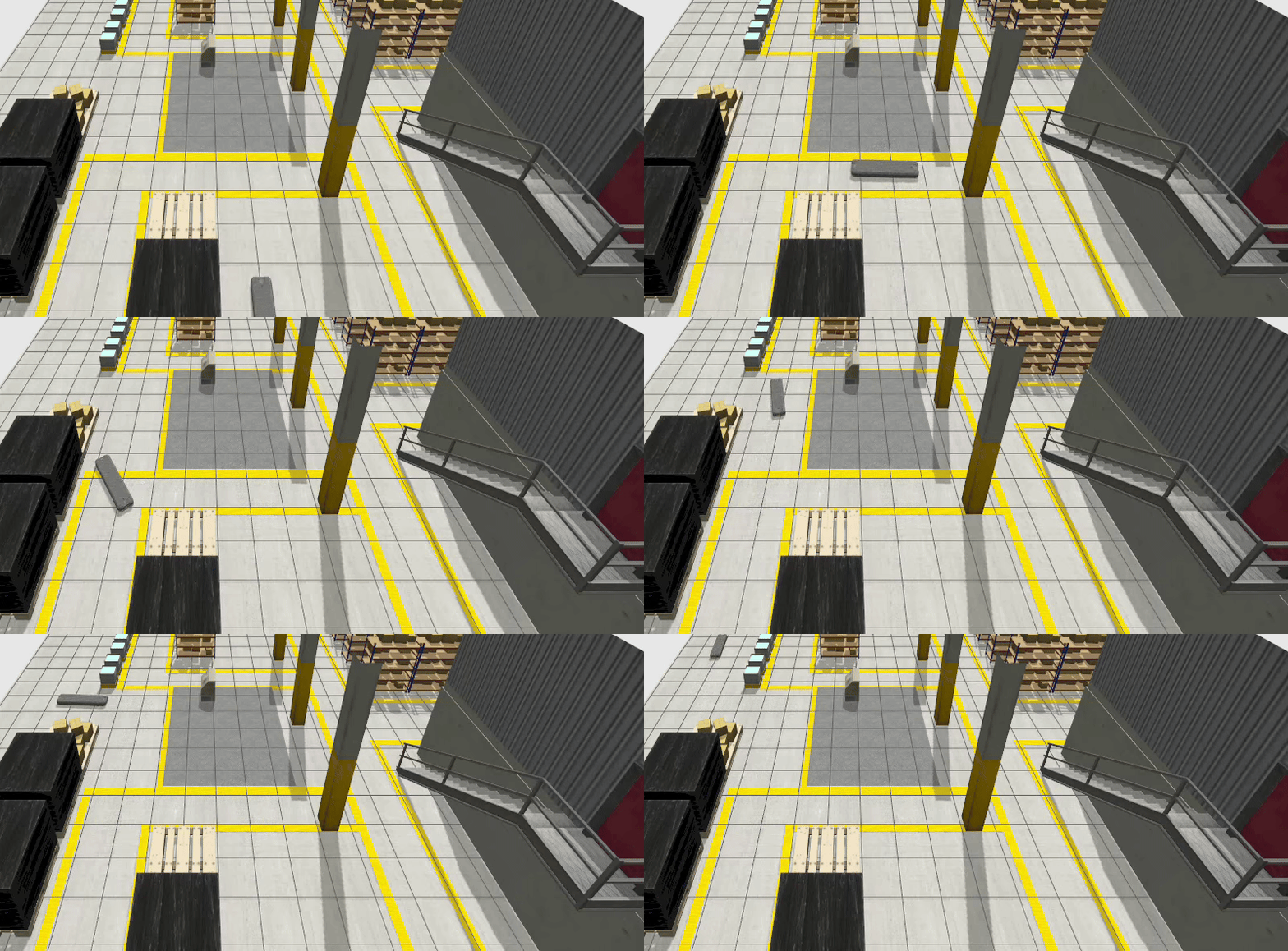
This project involved creating a simulation-ready digital twin of the ABB Flexley Tug T702 mobile platform. The digital twin replicated the robot’s exact dimensions, motion behaviour, physics, sensors, and other important physical properties.

The robot was tested in different simulation environments to evaluate its motion, sensor behaviour, navigation, and interaction with the surrounding environment.

ROS 2 · Gazebo Sim · URDF/SDF · Sensors · Robot Dynamics

View repository →

HUMAN-ROBOT INTERACTION · MACHINE VISION

Building a Curious Robot

This project involved transforming an ABB IRB 2600 industrial robotic arm into a human-interactive robot. The goal was to enable the robot to recognize human gestures and react accordingly.

The project consisted of two major parts. The first was a machine-vision system used to detect and recognize human gestures. The second involved sending specific instructions to the robot based on the recognized gesture, allowing it to perform predefined movements and responses.

RobotStudio · RAPID · Python · Machine Vision

View repository →

PATH PLANNING · MOBILE ROBOTS · ALGORITHMS

Comparison of Path-Finding Algorithms for Autonomous Navigation of Mobile Robots

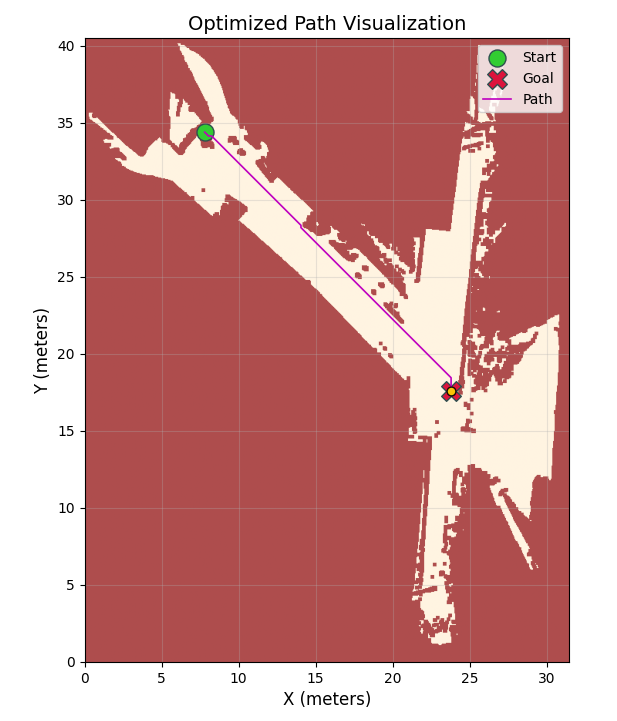
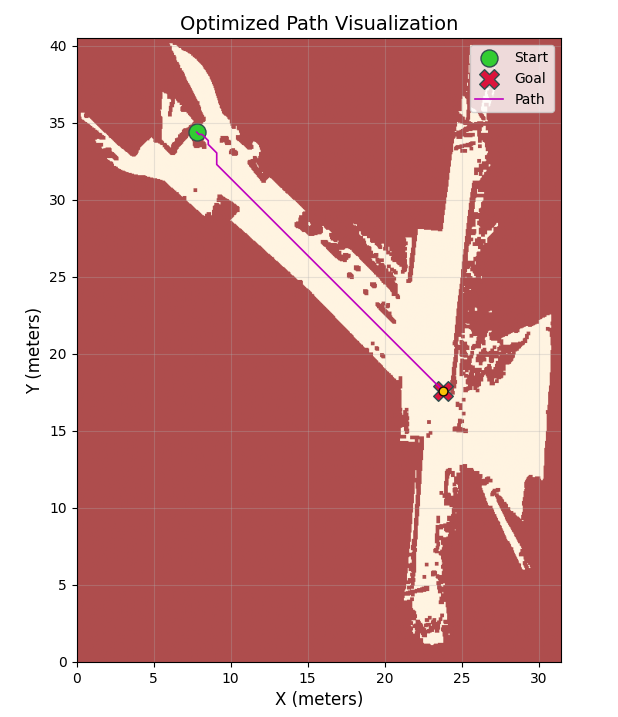
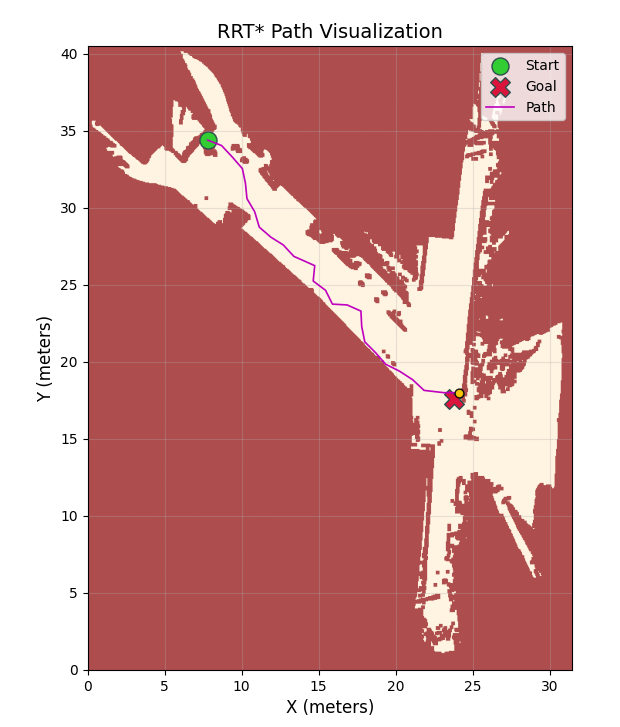
This project focused on comparing the performance of the A*, Dijkstra, and Rapidly-exploring Random Tree (RRT) path-finding algorithms for autonomous mobile-robot navigation in a simulated CERN facility.

The objective was to compute the most optimized path and evaluate the performance of each algorithm. The comparison considered the generated routes, path quality, computational behaviour, and suitability of each method for autonomous navigation.

Python · A* · Dijkstra · RRT · Path Planning · Autonomous Navigation

Skills and technologies

Robotics

ROS 2, Nav2, Gazebo, RViz, and SLAM

Programming

Python, C++, MATLAB, Simulink, Git, and Linux

Perception and Control

LiDAR, UWB, LQR, and path tracking

Mechanical Engineering

SolidWorks, Siemens NX, PTC Creo, and ANSYS